
Meta’s global data center infrastructure teams relied heavily on fragmented spreadsheets, disconnected planning systems, and manual forecasting workflows to manage long-range infrastructure investments. As forecasting complexity and operational scale increased, collaboration, visibility, and scenario planning became difficult to manage across teams.
Meta
Designing AI-assisted forecasting and scenario planning workflows for Meta’s global data center infrastructure
I led the design of CASPER (Cost Allocation Scenario Planning & Expense Reporting), a centralized forecasting and scenario planning platform built to help Meta’s infrastructure teams manage large-scale data center investment planning, streamline forecasting workflows, and improve cross-functional collaboration across global operations.
Background
Find the problem
To design a scalable forecasting and scenario planning platform, we first needed to understand how infrastructure planning teams were managing forecasting workflows across Meta’s global data center operations.
16
Cross-functional stakeholders interviewed
23
Forecasting and scenario planning workflows analyzed
7
Fragmented forecasting systems unified into a centralized experience
The Problem
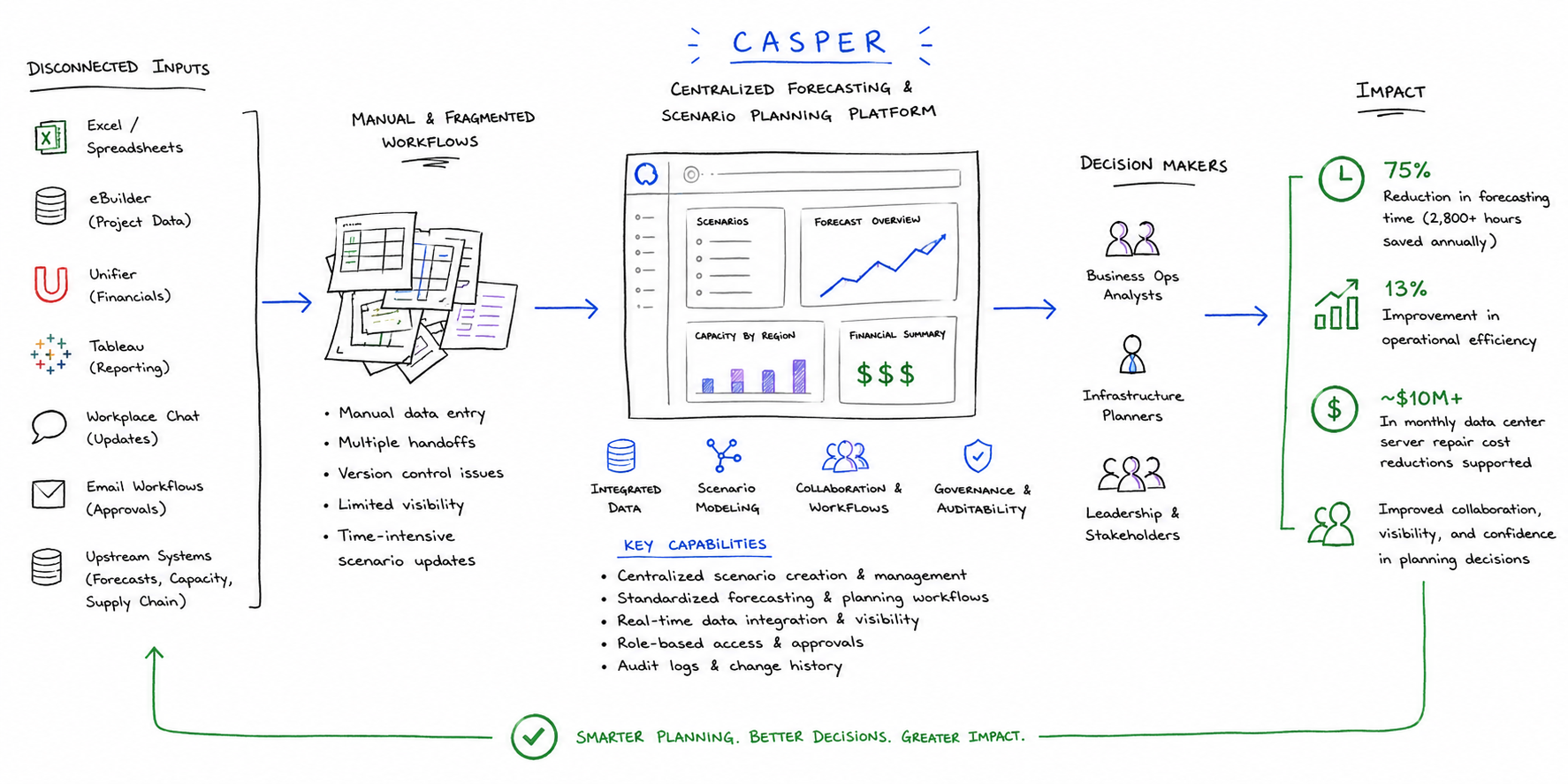
Financial forecasting and infrastructure planning across Meta’s Data Center Infrastructure organization relied heavily on disconnected spreadsheets, manual data entry, and fragmented tools. Analysts struggled to manage complex forecasting scenarios efficiently, making collaboration, reporting, and long-term planning difficult to scale.
The lack of a centralized scenario planning system created operational inefficiencies, duplicated work, and limited visibility into forecasting data across teams and regions.
- Manual Forecasting Workflows
- Fragmented Third-Party Systems
- Limited Cross-Team Visibility
- Time-Intensive Scenario Planning
- Increased Operational Costs
Objective
Create a centralized forecasting and scenario planning platform that streamlines infrastructure planning workflows, improves cross-functional visibility, and reduces manual forecasting effort across Meta’s global data center operations.
The Process
We mapped how forecasting and infrastructure planning data moved across spreadsheets, operational tooling, and cross-functional teams within Meta’s Data Center Infrastructure organization. Through stakeholder workshops and workflow analysis, we identified operational bottlenecks in scenario creation, forecasting updates, and long-range infrastructure planning.
Challenge 1
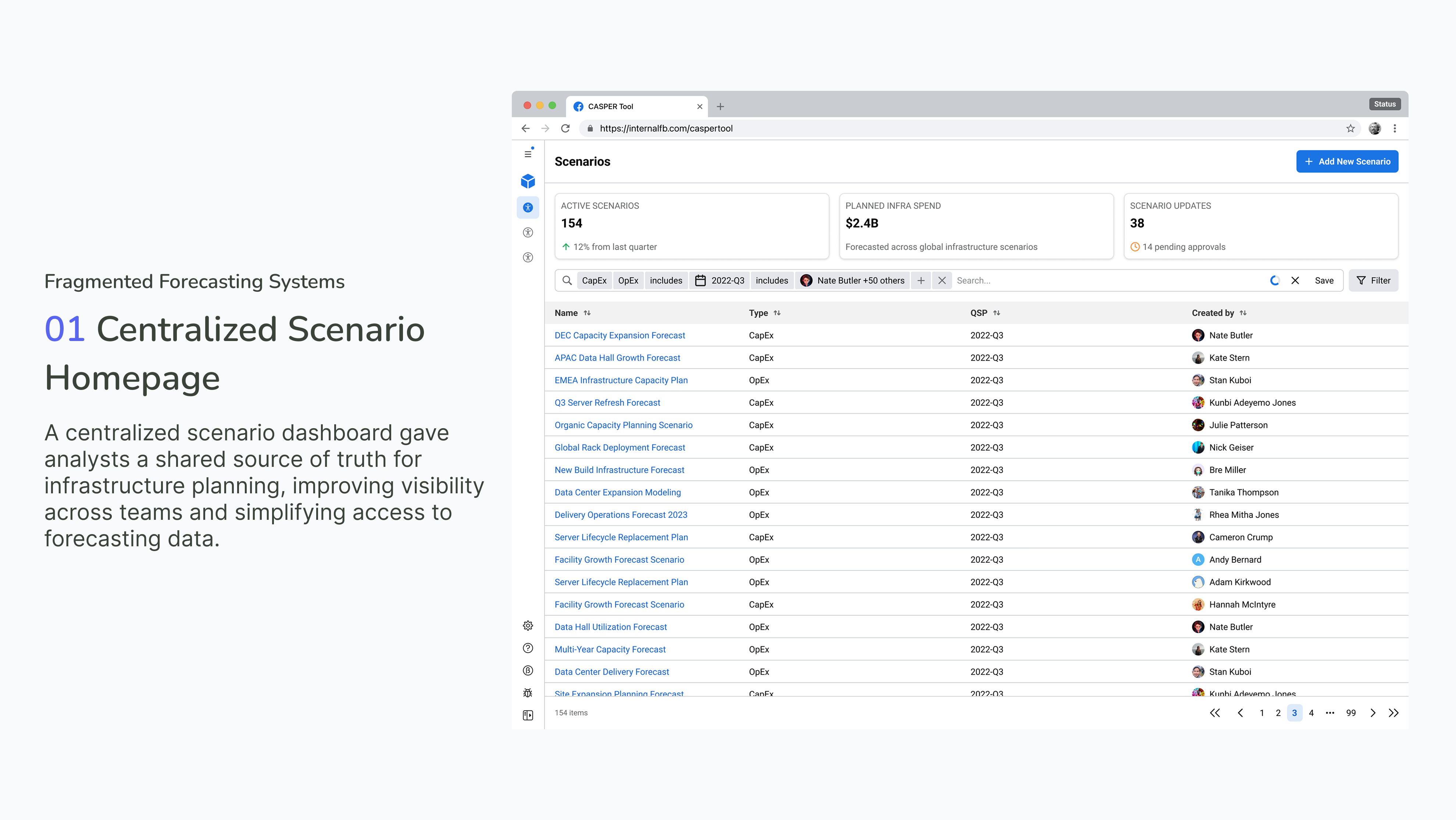
Fragmented Forecasting Systems
Centralizing disconnected planning workflows
How might we consolidate forecasting, cost planning, and infrastructure scenario management into a single platform experience that reduces manual coordination across teams and systems?
Metrics
- Reduced spreadsheet dependency
- Consolidated disconnected planning systems
- Improved cross-team forecasting visibility
Challenge 2
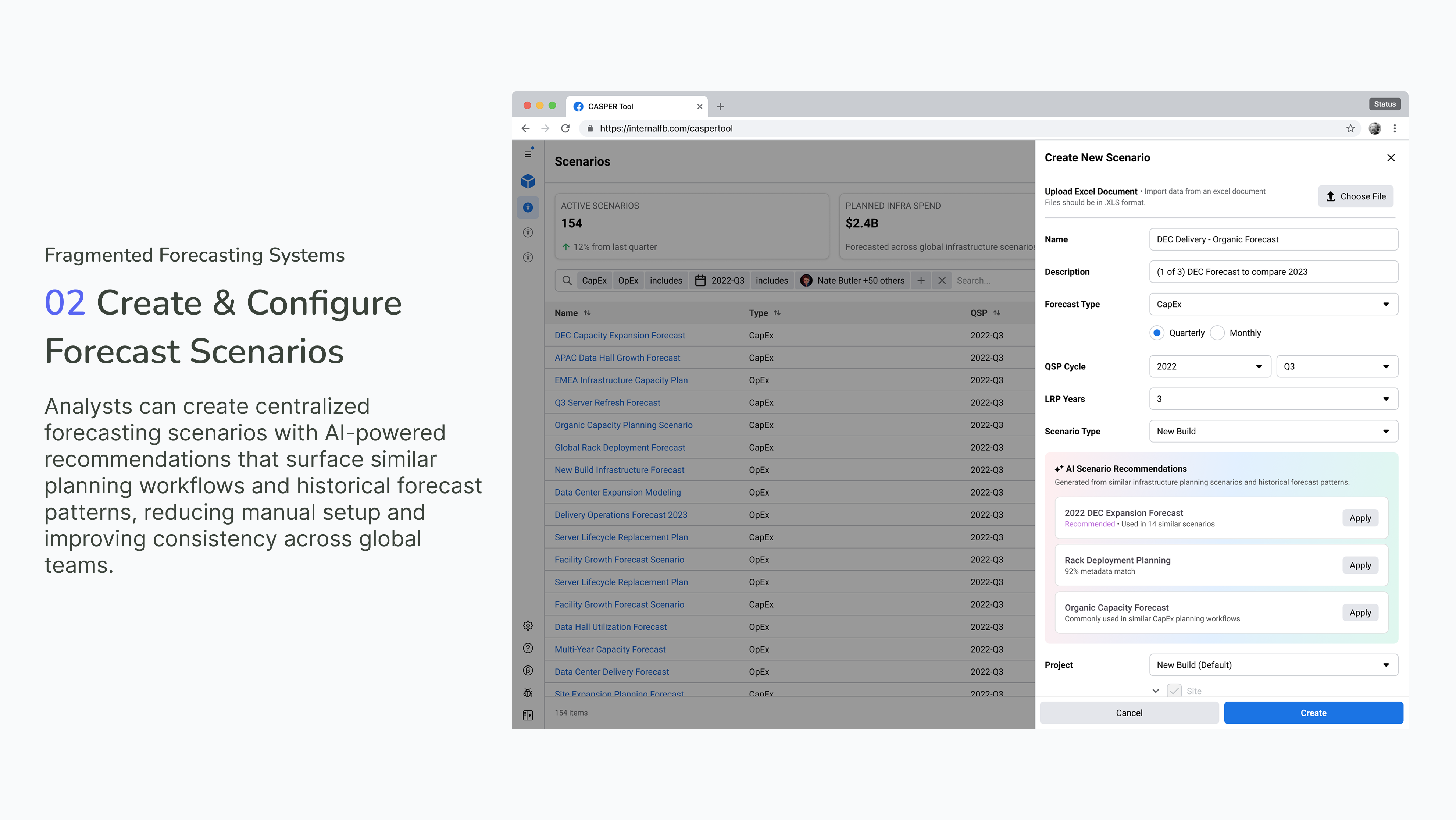
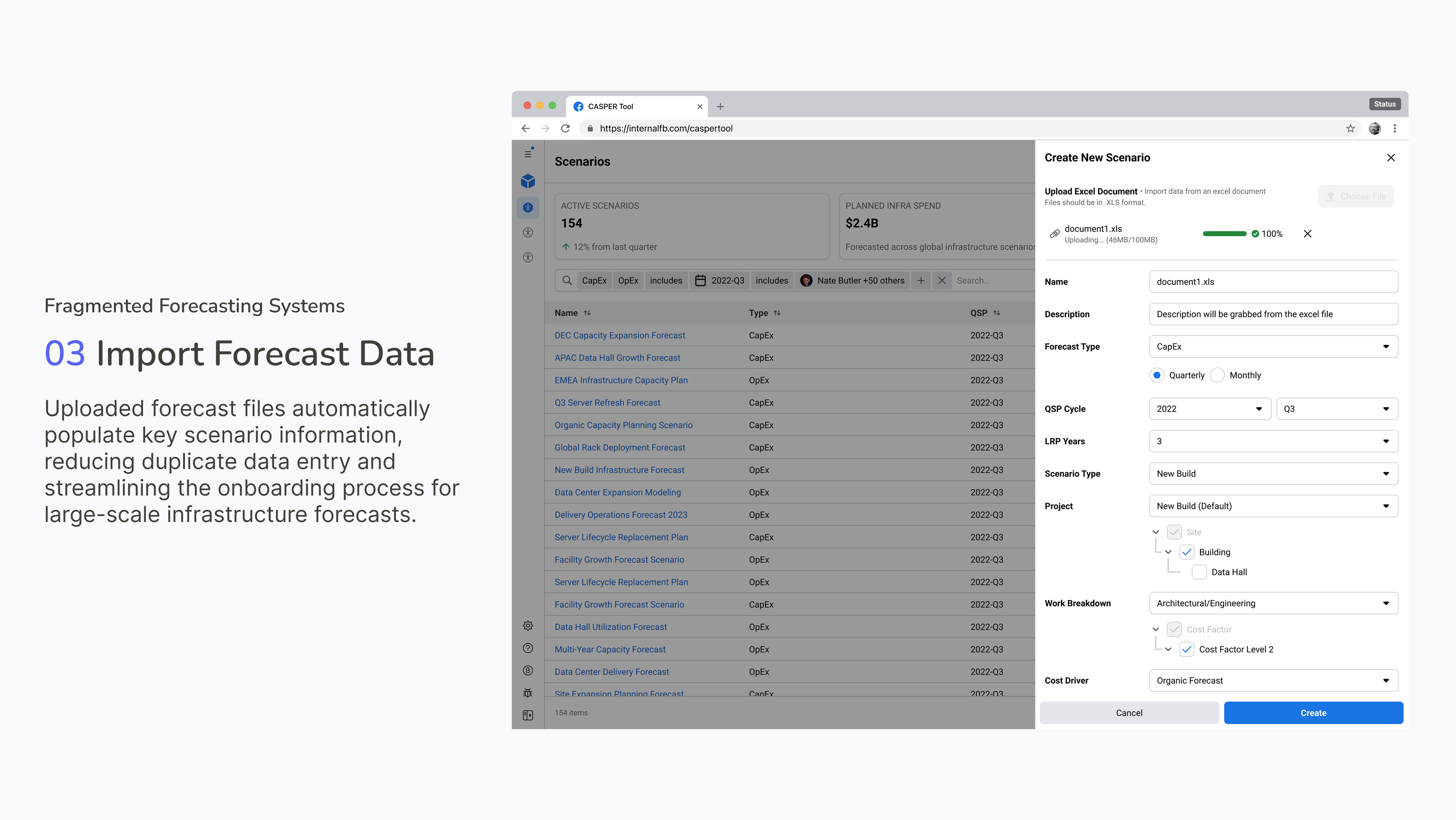
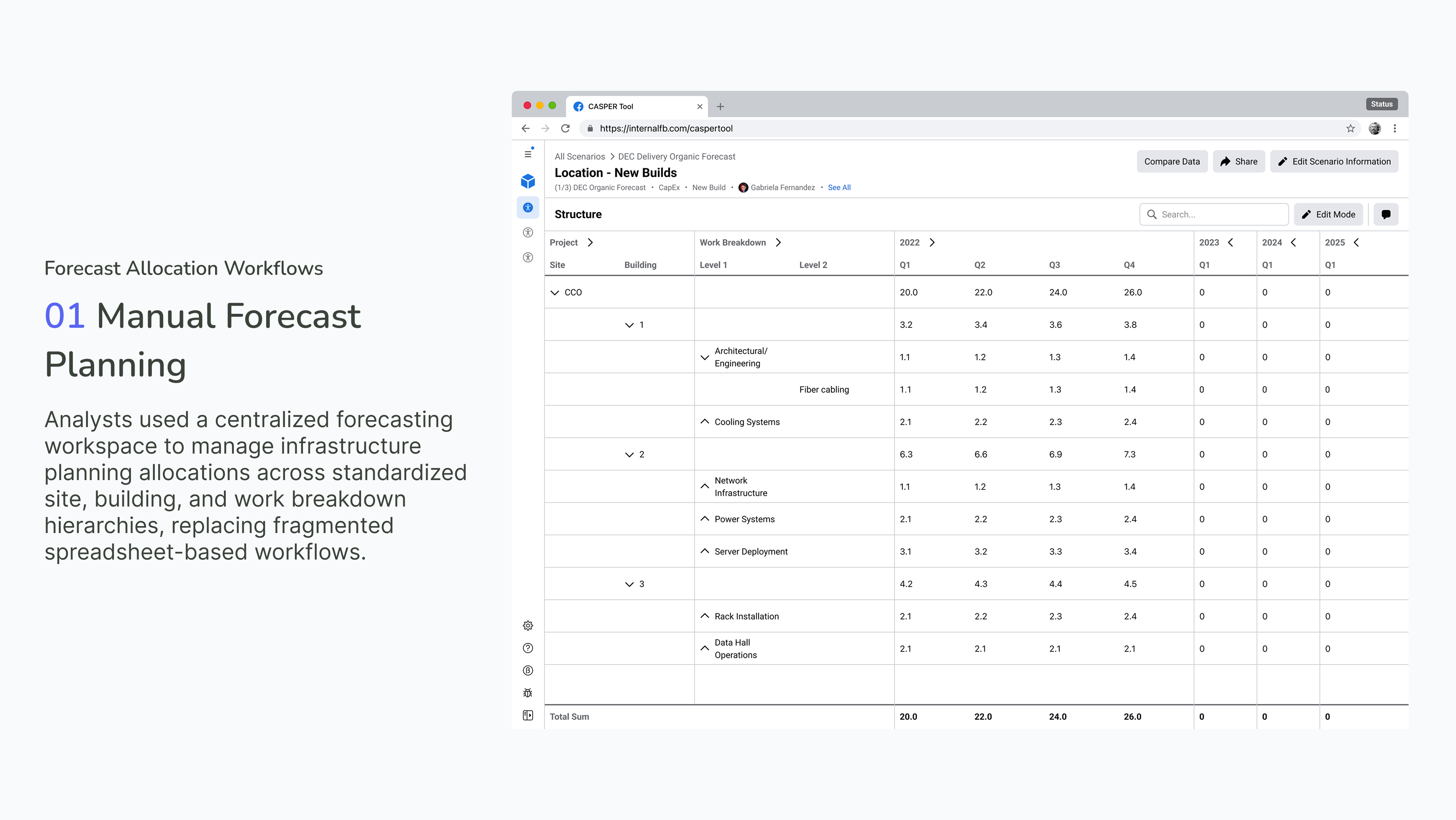
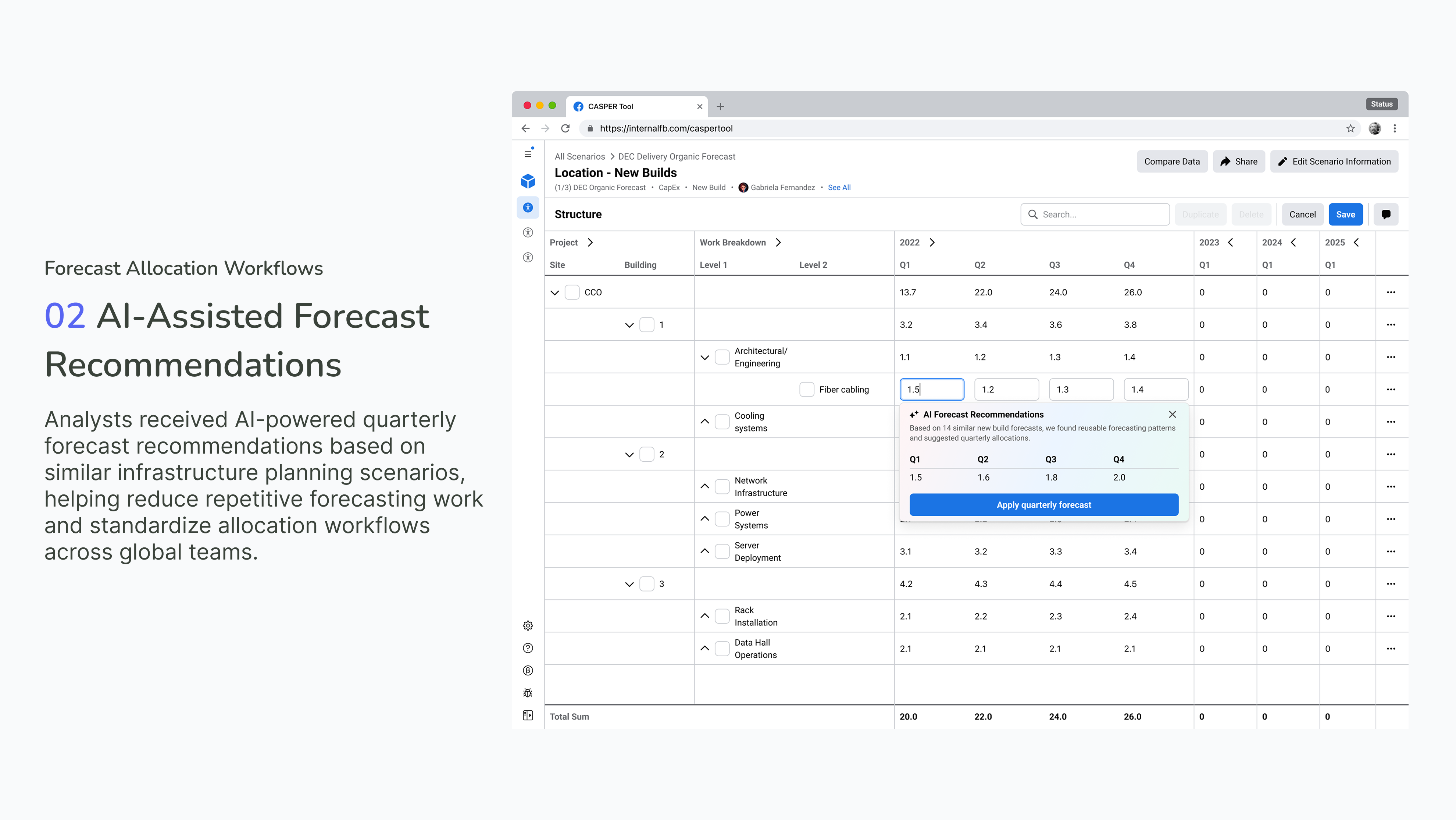
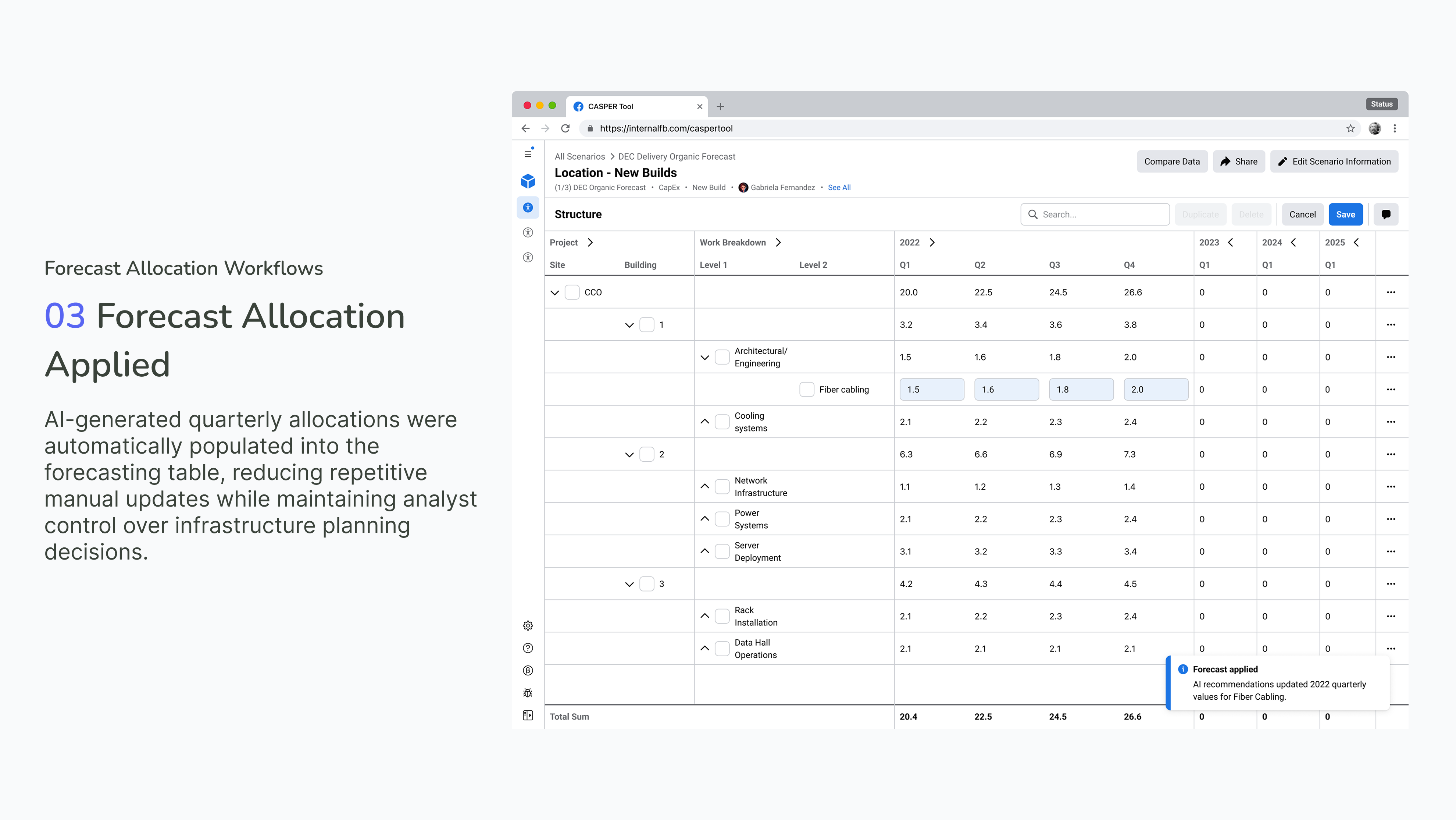
Forecast Allocation Workflows
Reducing repetitive and time-sensitive forecasting tasks
How might we streamline repetitive forecasting updates and infrastructure planning workflows so analysts can make faster and more confident decisions at scale?
Metrics
- Faster quarterly forecast updates
- Reduced manual forecasting effort
Challenge 3
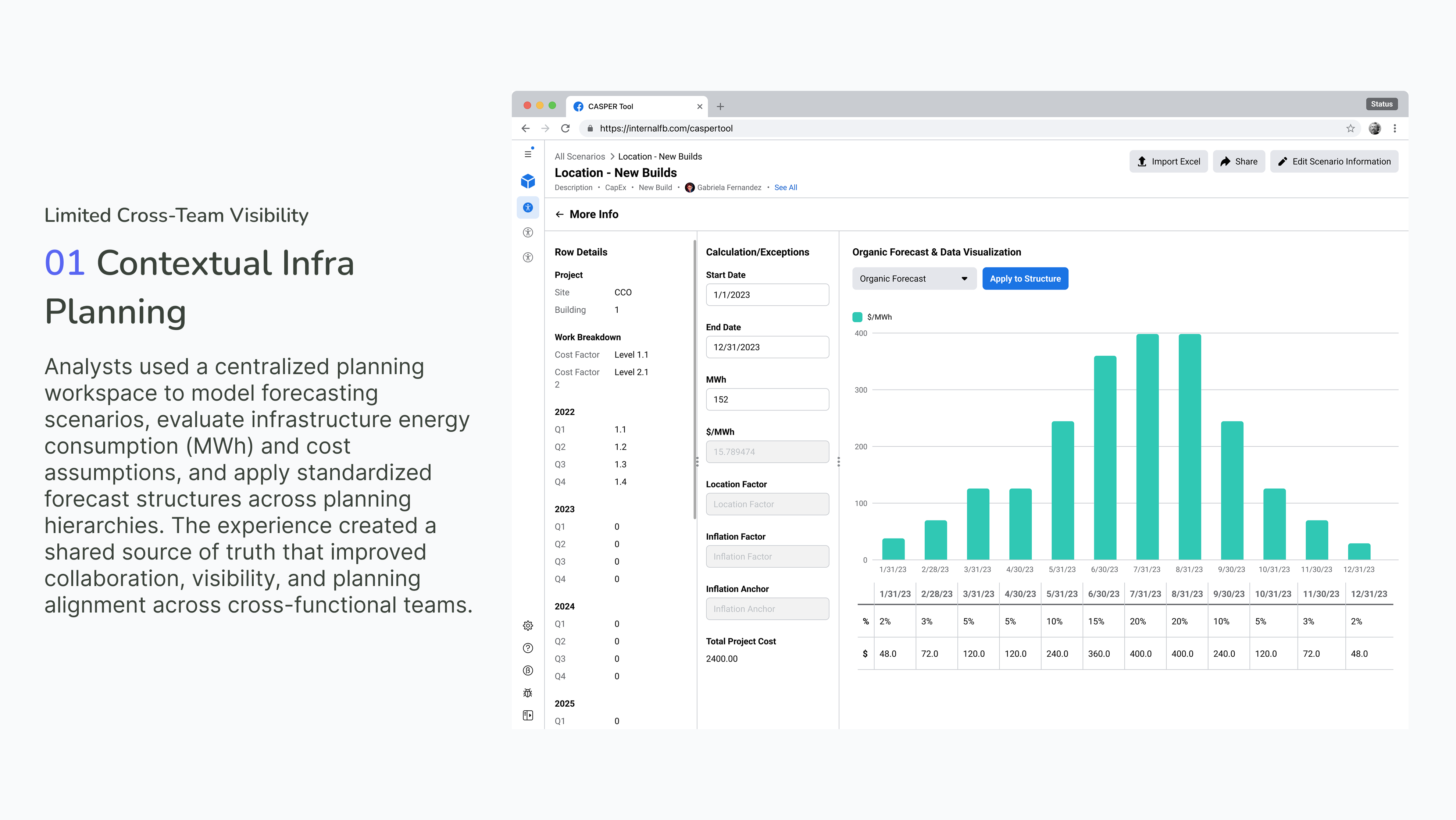
Limited Cross-Team Visibility
Creating a shared system for collaborative infrastructure planning
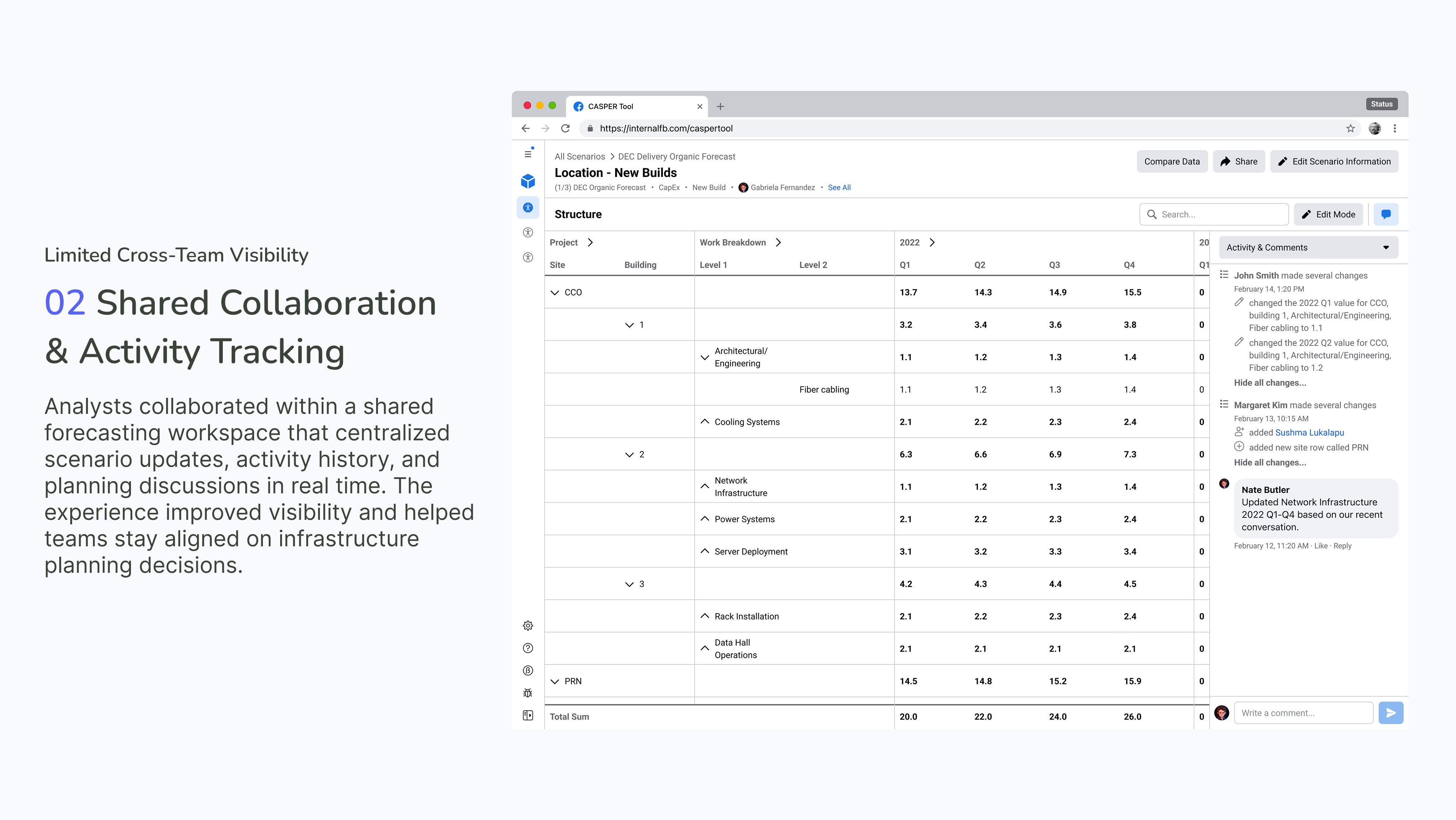
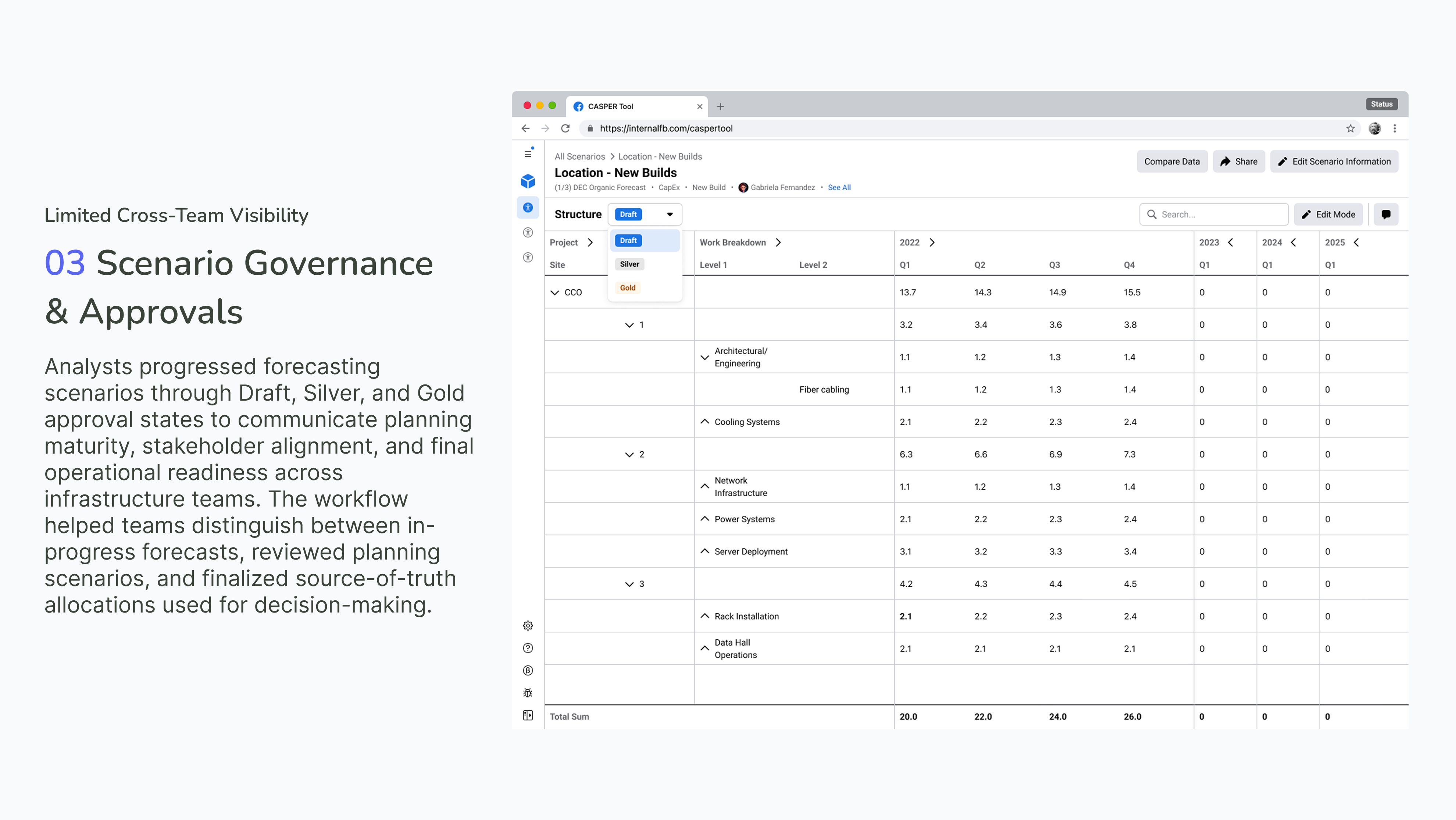
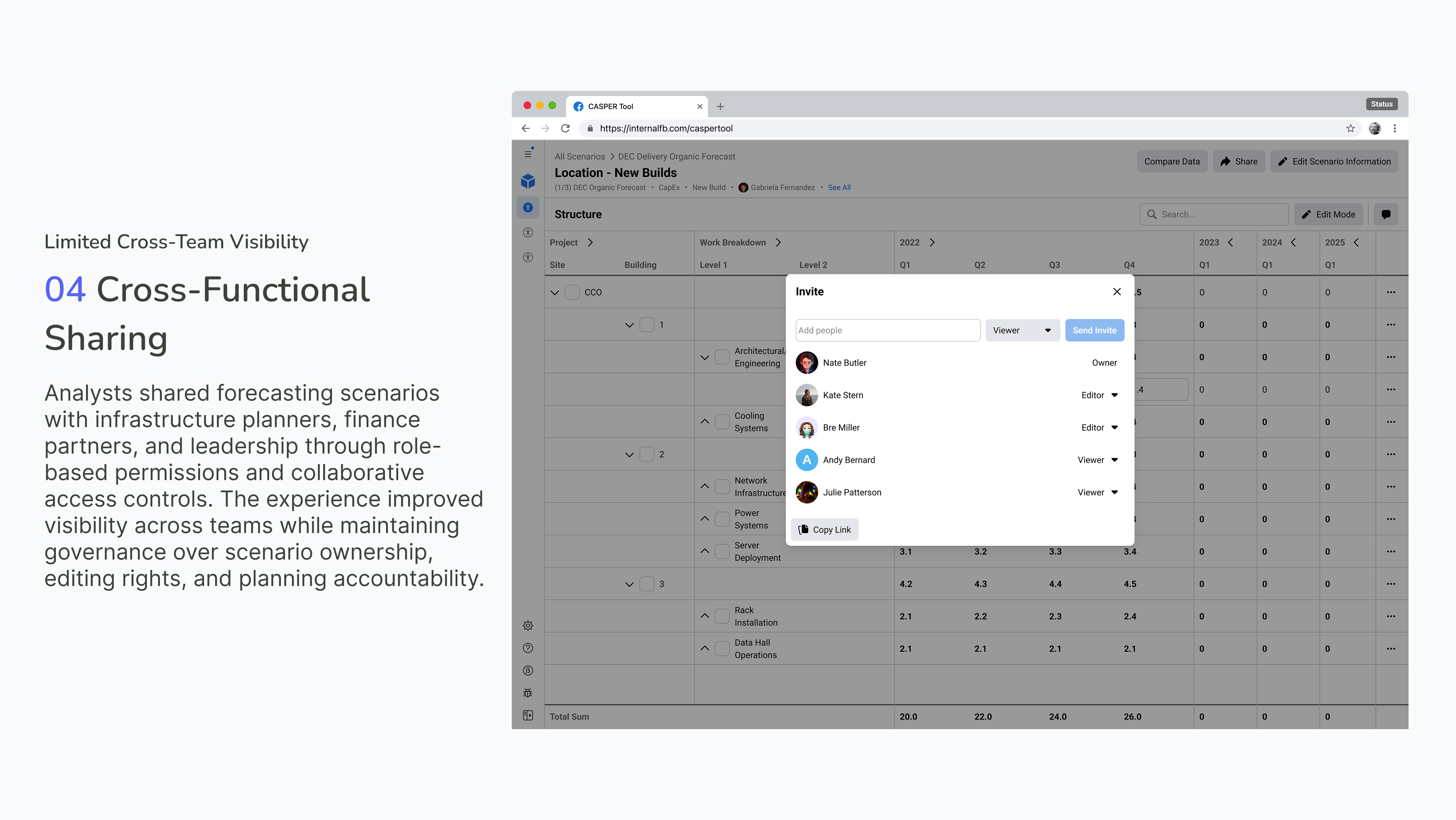
How might we improve collaboration, governance, and visibility between Business Operations analysts, infrastructure planners, finance teams, and leadership through centralized scenario planning and forecasting workflows?
Metrics
- Increased cross-functional planning visibility
- Centralized forecasting and scenario governance
- Simplified stakeholder collaboration and approvals
- Improved transparency across planning decisions
Lessons
-
Embrace Ambiguity
I learned how to stay adaptable and make confident design decisions within fast-changing environments.
-
Simplify Complexity
This project strengthened my ability to turn complex technical workflows into clear, usable experiences.
-
Design for Scale
I learned how to create flexible systems and workflows that support long-term operational growth and collaboration.